Employee attendance tracking: a practical guide
How small teams choose between manual logs, mobile check-ins, geofencing, and review workflows.
Start with the record you need
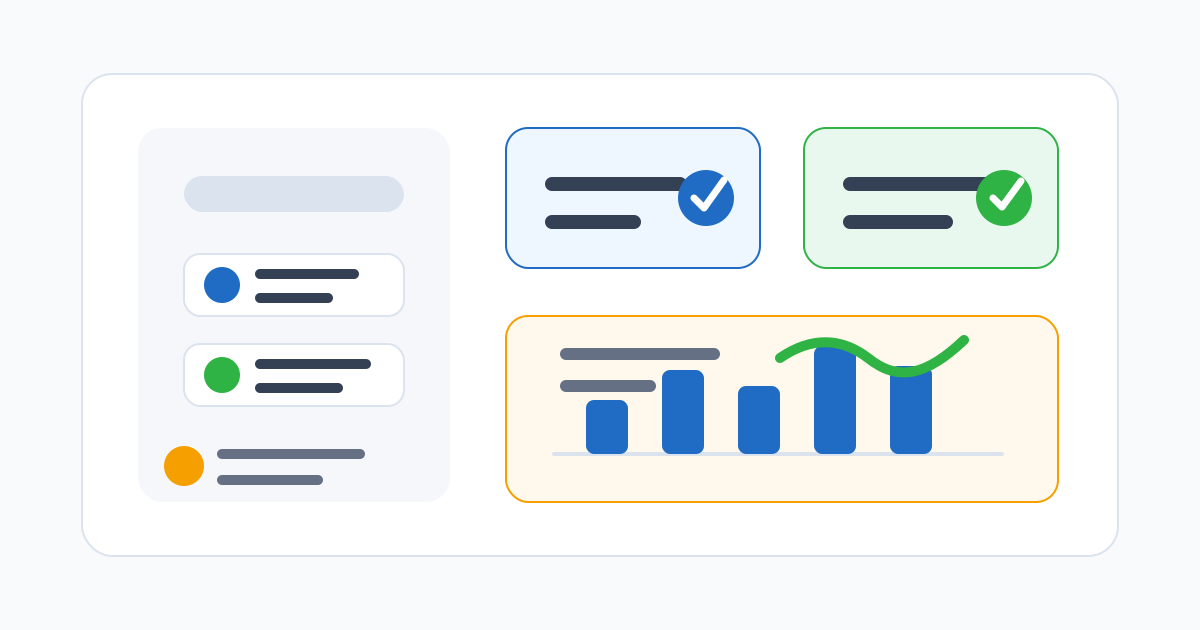
Attendance tracking is useful when the record is clear enough for payroll, compliance review, and everyday operations. A reliable system should answer who worked, when they worked, where the punch happened, and whether a manager reviewed anything unusual.
Manual spreadsheets can work for a tiny team, but they usually fail when people work across branches, field locations, or flexible schedules. The failure is not only data entry. It is the lack of evidence around changes, approvals, and exceptions.
Compare the main approaches
Paper logs are familiar, but they are hard to audit. Shared spreadsheets are faster, but they rely on trust and manual cleanup. Biometric terminals can be precise in a single workplace, but they do not fit mobile or hybrid teams.
Mobile attendance with GPS, approved Wi-Fi, and manager review sits in the middle. It gives enough context for operational confidence without forcing every employee through one physical device.
Build in review instead of perfection
No attendance tool should pretend every punch is perfect. People forget to check out, phones lose signal, and schedules change. The important design choice is whether the system turns those events into visible exceptions that managers can review before payroll closes.
That review workflow is what makes attendance data dependable. It gives teams a way to correct mistakes while keeping a record of what changed and why.
Where to go next
If you are setting up attendance from scratch, the attendance policy for small business walks through the rules side, and payroll-ready timesheets covers the closing workflow. For the product surface, see accurate attendance and the mobile app overview.
Related posts
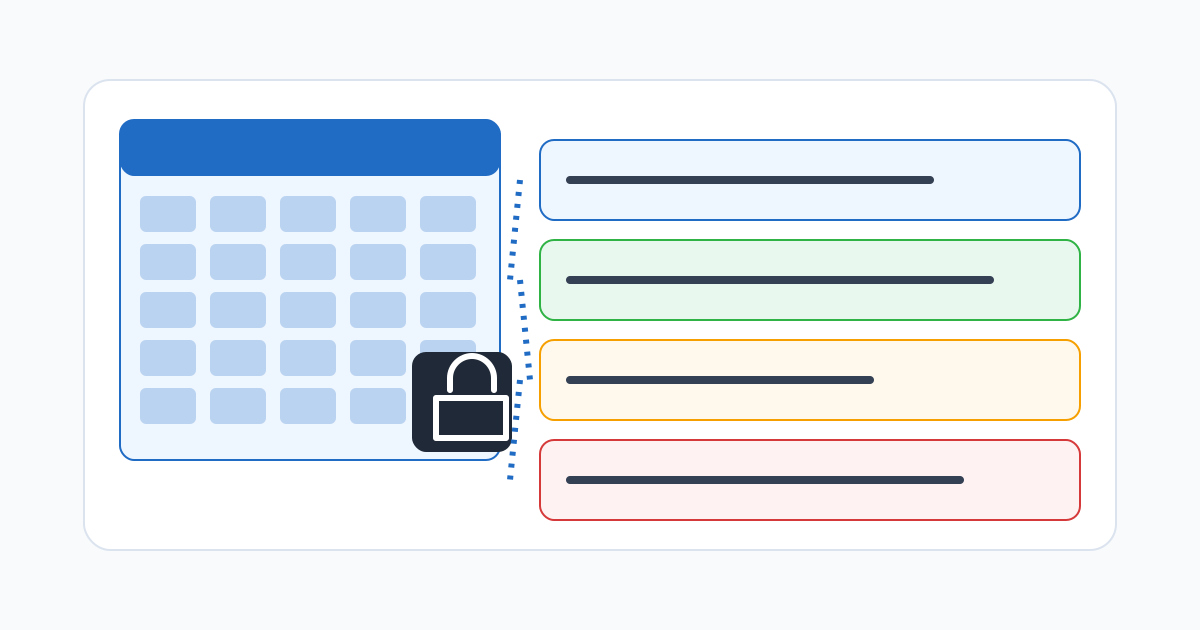
Monthly attendance close: pipeline, finalization, and reopening safely
How to run a monthly attendance close that locks the record without making corrections impossible — including the right way to reopen a finalized month.
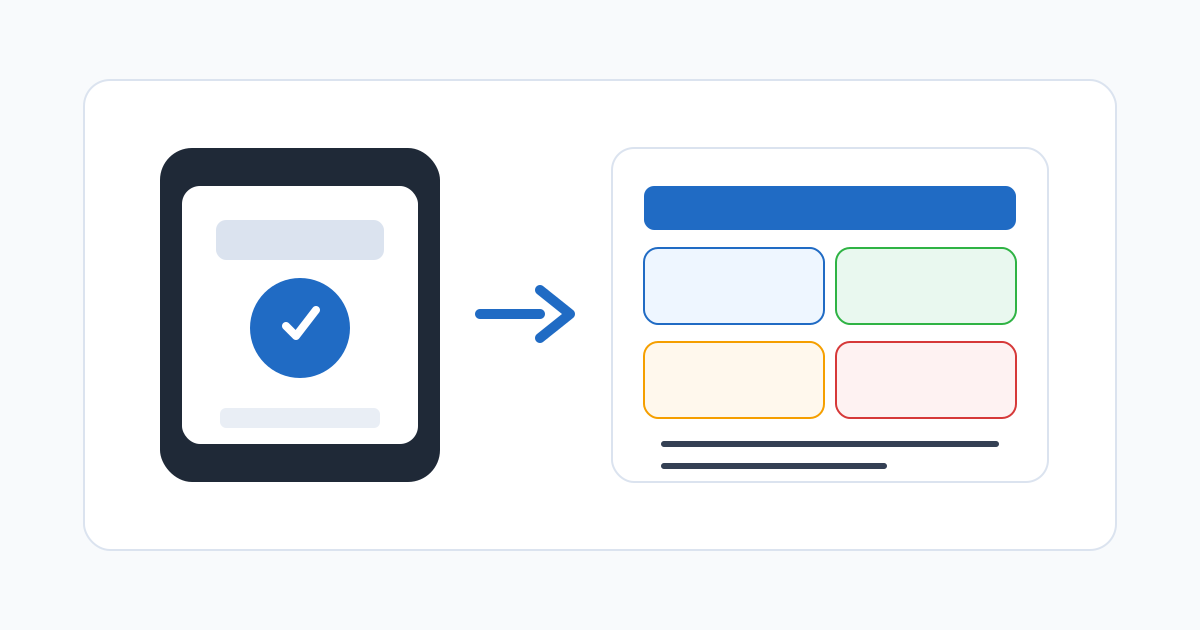
Attendance software vs time clock apps: how to choose for a growing team
The two categories overlap, but they solve different problems. A practical breakdown of when a time clock app is enough and when you need full attendance software.
Buddy punching prevention: device risk without crossing the line
How to reduce buddy punching with proportionate device checks, location signals, and review patterns — without turning attendance into surveillance.